
Inside an AFSOC mission to train foreign pilots and airstrike specialists
Emissaries from Air Force Special Operations Command worked with counterparts from Argentina, Lebanon, Tajikistan, and Uzbekistan.

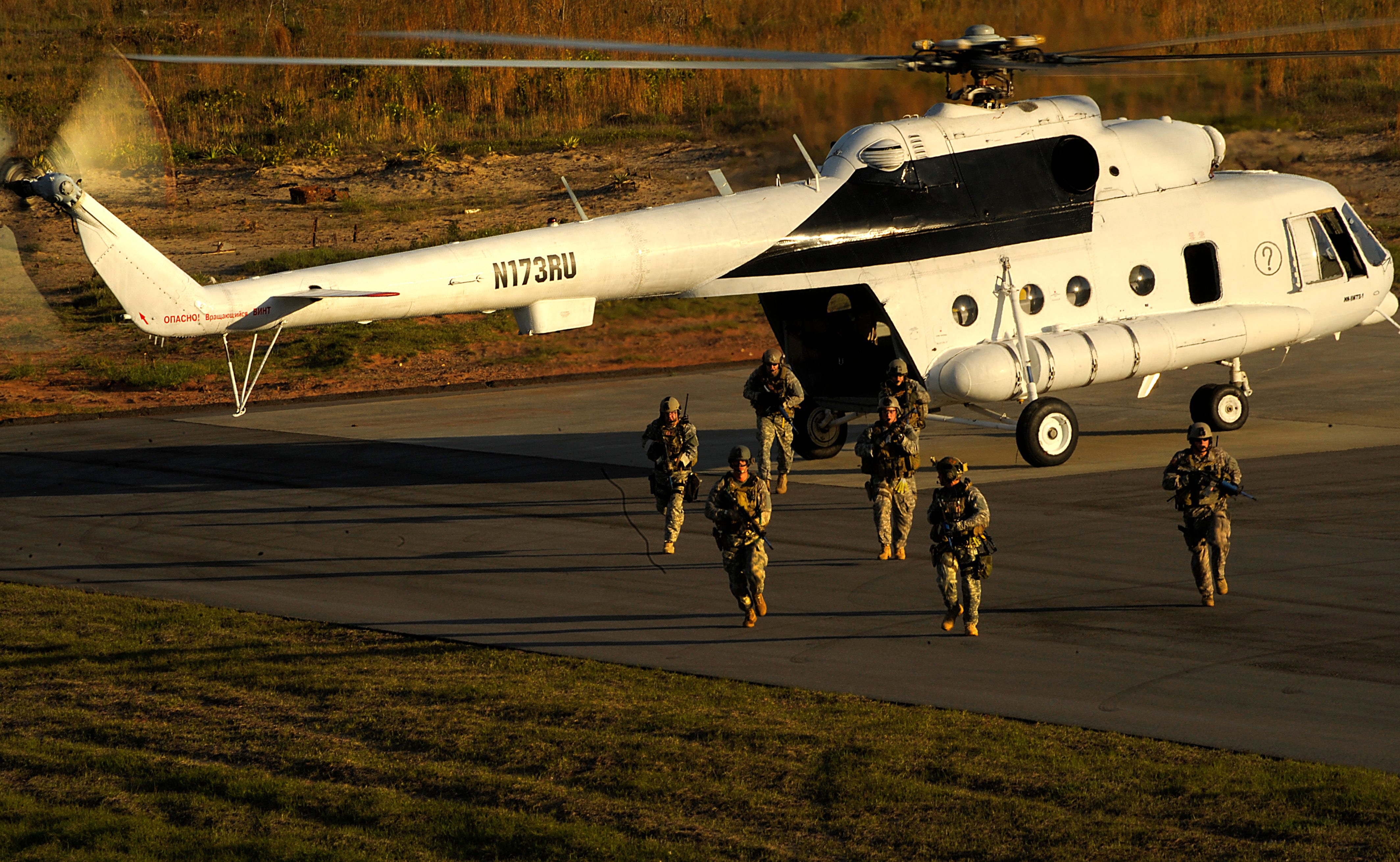
US aviation advisers quietly dotted the globe in recent years, restarting engagements with Argentinian commandos after the election of Javier Milei, training Lebanese and Jordanian forces with an eye toward using them against Iran, and conferring with Uzbek and Tajik officials about how to take advantage of the US-supplied aircraft that Afghan Air Force crews flew to their countries as the Taliban took over Kabul.
The insights come from annual unit histories compiled by the 711th Special Operations Squadron between 2020 and 2024, which I obtained through a Freedom of Information Act request. Before its mission changed last year, the 711th SOS was charged with an aviation version of the type of “foreign internal defense” mission that Army Green Berets and Navy SEALs often perform.
Air Force Special Operations Command’s advisers offered training in topics like close-air support and aerial intelligence gathering to help foreign militaries "maintain internal order,” as well as advance US interests. To my frustration, the 711th SOS histories don’t provide dates, but they sometimes allude to major world events, like the US retreat from Afghanistan in summer 2021 and Milei’s election in fall 2023.
Taken together, the records shed some light on the strategies and contingency plans across the Pentagon’s geographic combatant commands, several of which stand center-stage during President Donald Trump’s second term.

A ‘ground-breaking Joint Intelligence Analysis node’
In the Levant, the 711th SOS records describe how US advisers trained the Jordanian and Lebanese militaries so they “can integrate with US coalition forces in the region, acting as a force multiplier for military capabilities against ISIS and Iran.”
The training involved modified turboprop planes outfitted with heavy armaments and sensors for reconnaissance and close-air support; certifying local forces to call in airstrikes; and setting up a hub to process and share intelligence from different military branches, or coalition partners.
US Central Command did not respond to queries seeking more details, but Beirut appeared to be a focal point of the effort.
The 711th SOS records described Lebanon as the “#1 priority country” for CENTCOM’s special operations component. The country has received more than $3 billion in military aid since 2006, and The Intercept revealed in 2022 that elite elements of the Lebanese military participated in a secretive US proxy force program under the code name “Lion Hunter.”
More recently, the Trump administration has been pushing a plan that would see the Lebanese military reign in Hezbollah, the Iranian-aligned political party and militant group that’s popular among Shiites and currently fighting an Israeli invasion in the country’s south.
The US-brokered plan seems likely to flounder. It risks sectarian civil war, and Lebanese officials have generally prioritized domestic stability over confronting Hezbollah. But the training described in the 711th SOS records is something the US could try to leverage.
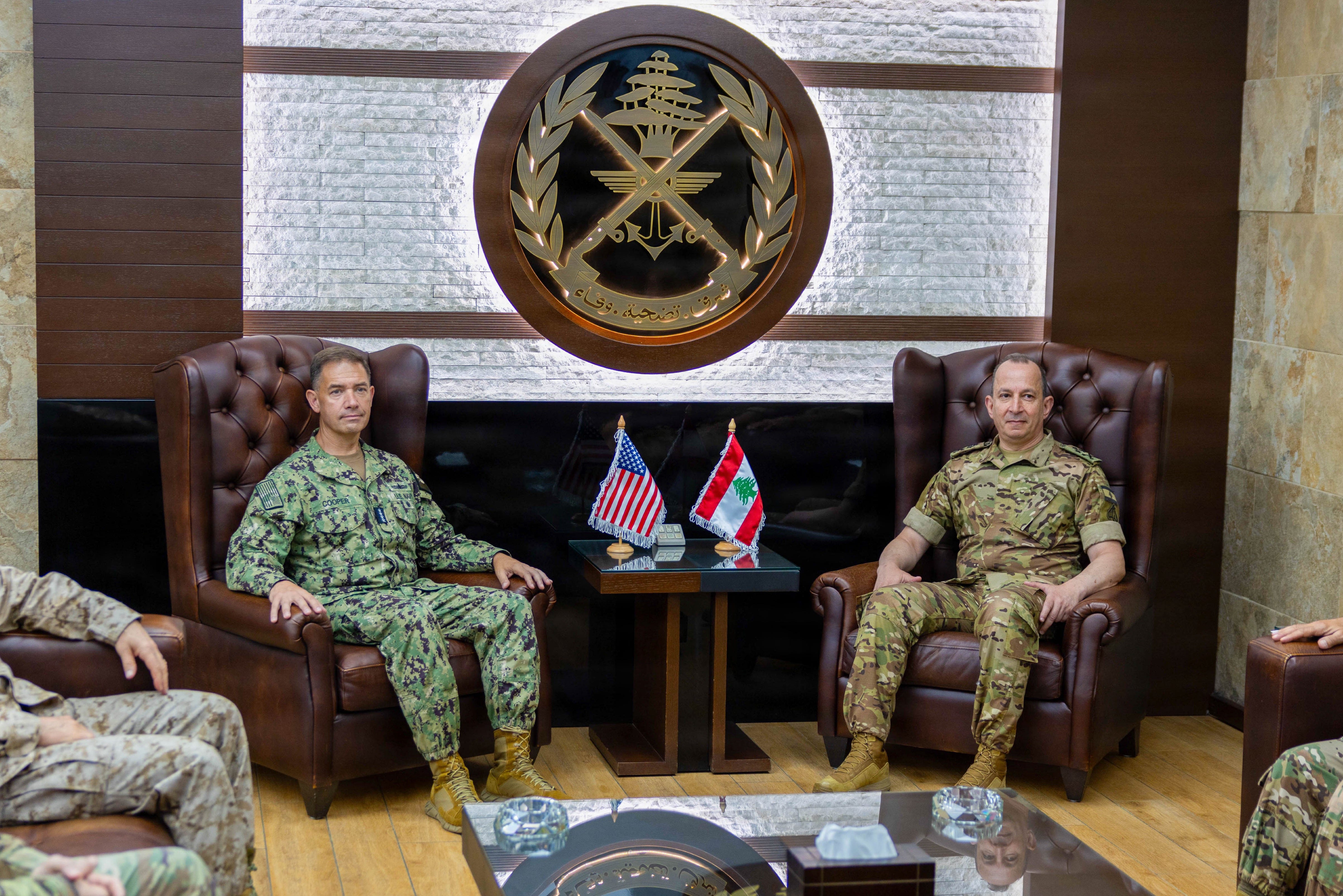
In recent years, advisers from the 711th SOS trained the Lebanese Armed Forces on new A-29 Super Tucanos, a light attack plane that’s been marketed lately as a top-notch drone killer.
The A-29’s low-acoustic signature, FLIR cameras, and other sensors make it useful as an intelligence collector too, which may explain why US advisers — in addition to building Lebanese air-to-ground integration doctrine — established “a ground-breaking Joint Intelligence Analysis node” for the Lebanese Air Force staff, according to the 711th SOS records.
The 711th SOS also certified Lebanese airmen as Joint Terminal Attack Controllers, a qualification common among AFSOC special warfare operators that allows them to call in strafing attacks and precision bombs from forward positions on a battlefield. The effort to mint Lebanese JTACs “doubled the [Lebanese Air Force’s] current organic JTAC capability,” per the 711th SOS records.
Training foreign fighters to mark targets and relay enemy positions to warplanes overhead has, in places like Syria and Afghanistan, ensured air power can back up US proxies when American JTACs can’t go into combat for logistical or political reasons. Foreign fighters can pass information from the front lines to a local strike cell, where US special operators with JTAC qualifications can observe the battle on aircraft video feeds and provide final attack guidance to pilots.
The 711th SOS exchanges in Jordan — where US forces have consolidated during the war with Iran, to much controversy in the Hashemite Kingdom — also involved building a cadre of close-air support specialists.
The US advisers helped stand up a locally run JTAC instructor program, “resulting in a self-sufficient and organic [Royal Jordanian Air Force] JTAC capability,” the records said.
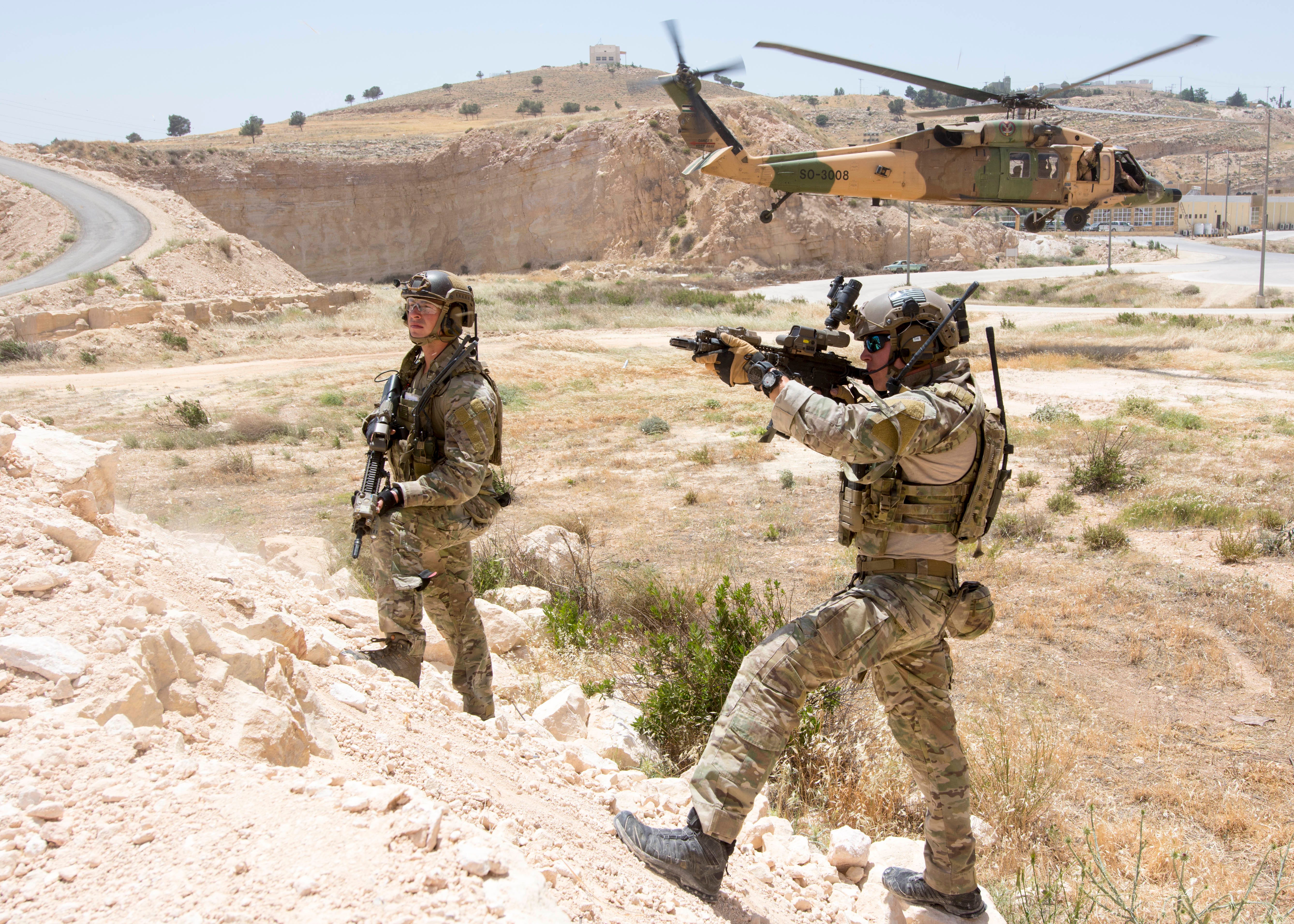
The Jordanian population is deeply pro-Palestinian and critical of US foreign policy. But the kingdom’s military has a strong relationship with the Pentagon, exemplified by a domestically sensitive agreement inked in 2021 that gives the US military “unimpeded” access to key bases in the country.
The 711th SOS records flicked at that close partnership. The US aviation advisers integrated with “Jordanian, French, and US special operations ground forces,” flew scores of sorties with the Royal Jordanian Air Force, and helped add the kingdom’s border patrol planes to CENTCOM’s air tasking order, making the aircraft available for daily operations.
“The focus of the engagement was to bolster Jordanian air-to-ground integration amongst the [Royal Jordanian Air Force] and Jordanian and US special operations ground forces,” the 711th SOS records said. “The efforts of [a 16-man advising team] led to the first organic forward refueling capability of Jordanian helicopters in support of Syrian border operations and also led to [Royal Jordanian Air Force] AT-802’s addition to the CENTCOM ATO — acting as a force multiplier for military capabilities against ISIS and Iran in the region.”
‘The new pro-US Argentinian president’
Under the second Trump administration, US Southern Command’s domain has received a level of attention (i.e., airstrikes against alleged drug smugglers of dubious efficacy and legality) that far surpasses the operations documented by the 711th SOS records, which mostly occurred during President Joe Biden’s tenure.
However, there is an interesting nugget in between mentions of counternarcotics missions in Panama and Paraguay — perennial destinations in the decades-long US war on drugs.
Beginning in late 2023, the records say the 711th SOS helped restart engagements between US and Argentinian SOF units.
“Per SOCSOUTH,” the 711th SOS records said, referring to SOUTHCOM’s special operations arm, “this is the first SOF touchpoint with Argentinian SOF leadership and forces in the last four years and coincides with the new pro-US Argentinian president Javier Milei taking office.”
SOUTHCOM didn’t respond to a request for comment.
Milei’s predecessor, Alberto Fernández, was known for pursuing strong ties to China and for his interest in joining BRICS, a group of emerging economies that’s often viewed as a counterweight to American power. Milei, by contrast, has vocally endorsed deeper links with NATO, Israel, and especially the US.
The training exchanges after Milei’s victory appeared to be exploratory. The 711th SOS sent advisers with intelligence and personnel recovery backgrounds to collaborate on survival training, “with an emphasis on cold-weather and mountainous survival conditions.”
The mission helped “lay the foundation for future” exchanges and “exercises across the joint force,” the 711th SOS records said, adding that it “will increase US presence in the region, and bolster greater competition efforts against the PRC [People’s Republic of China] to become the partner of choice.”
Milei was the first foreign leader to visit Trump at Mar-a-Lago after the 2024 election, and he has certainly pivoted Buenos Aires’s foreign policy in a decidedly pro-US direction. On the military front alone, Argentina under Milei has agreed to joint patrols in the South Atlantic with the US Navy, accepted US financing to purchase F-16 fighter jets over a Chinese offer to supply JF-17s, and sought an enhanced NATO partnership status.
In light of Buenos Aires’s rapprochement with Washington, the 711th SOS mission looks like quite the successful trial balloon.
‘Countering ISIS-K with Tajik partners’
In Central Asia, a four-person team proffered their intelligence, surveillance, and reconnaissance expertise to Uzbek and Tajik partner forces between late 2021 and 2024, as those countries developed plans for “newly acquired Afghan aviation assets,” the 711th SOS records said.
The documents name PC-12 and C-208 aircraft, though not their specific variants. AFSOC uses a modified PC-12 for ISR missions under the designation of U-28 Draco. Likewise, the C-208 can ferry cargo or be outfitted with Hellfire missiles and sensors to perform intelligence missions.
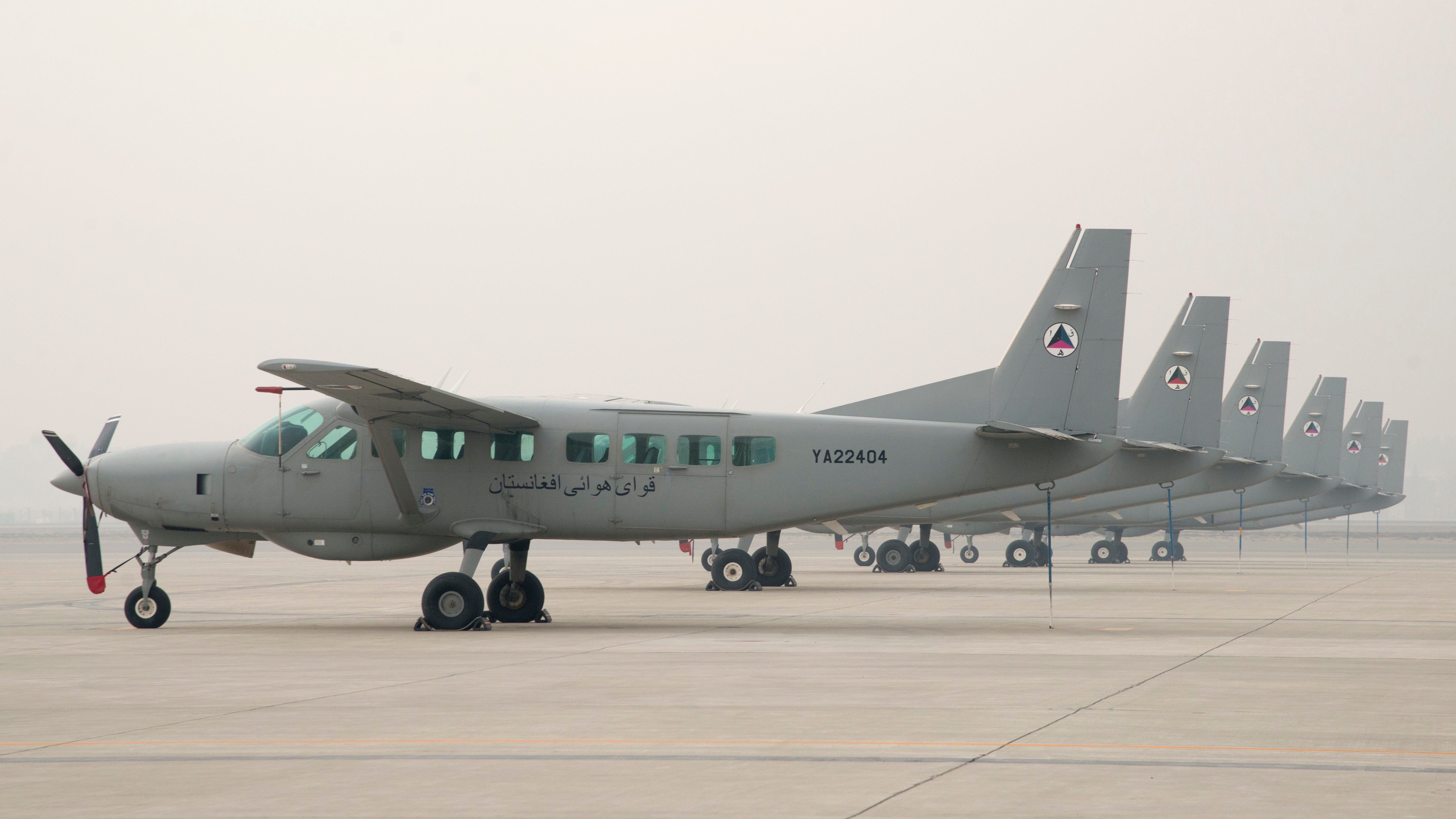
Before the Taliban takeover, the US-backed Afghan government’s air force inventory included dozens of C-208s configured for both roles. The Afghan Special Mission Wing — a now-defunct elite aviation force — also operated a squadron of PC-12s. As Kabul fell, Afghan pilots evaded the advancing Taliban by flying scores of these types of US-bought aircraft over international borders, orphaning the equipment in Uzbekistan and Tajikistan.
Figuring out how the two Central Asian countries could use these tricked-out planes was a top priority for Secretary of Defense Lloyd Austin under the Biden administration, according to the 711th SOS records, which noted that an eight-person team was dispatched to augment another US assessment team bound for Uzbekistan and Tajikistan.
Deals were eventually inked, to Taliban frustration, that allowed both countries to keep at least some of the aircraft for their own air forces.
“In addition, the 711th SOS was tasked by AFSOC to provide an [advising team] capable of conducting advisory and operational missions supporting CENTCOM/CC’s #1 priority — countering ISIS-K with Tajik partners,” the records said, referring to the Islamic State branch in Afghanistan that primarily tussles with the Taliban, but made international headlines when it attacked a concert hall in Moscow, killing more than 140 people.
“In preparation” for the advising mission, the 711th SOS records said, “the team conducted intensive self-recovery training (spanning swift water rescue, ropes rescues, and wilderness/austere medicine) at high altitudes simulating the environments in Tajikistan and neighboring countries as personnel recovery assets are not available in the area of potential operations.”
CENTCOM did not respond to a request for comment about the mission.